
The process
What to Expect During Mold Remediation
Mold remediation follows a predictable order: find the source, seal off the area, clean the air, remove and clean, then confirm it worked. Knowing the order makes the plastic walls and humming machines less alarming.
The process in brief
During mold remediation, the crew seals the affected area behind plastic sheeting, sets up equipment that pulls air out through HEPA filters, removes moldy materials that can't be cleaned, cleans and treats what stays, and then checks that the area is clean before taking containment down. You'll lose use of the work area for the duration, hear fans running, and see workers in protective suits. The rest of the home stays usable in most residential jobs.
Here's how that plays out, step by step. Our mold remediation service page covers each step in more detail.
Before the work starts
Assessment
Someone looks at the area, measures moisture, and traces the water back to its source. This is where the scope comes from: which materials are affected, how far containment needs to go, and whether the source has been fixed. If the source isn't known yet, a mold inspection comes first.
Getting the house ready
- Clear a path from the door to the work area.
- Move furniture, clothes and belongings out of the affected room if you can. Items that stay will be covered.
- Make a plan for pets, who shouldn't wander near containment.
- Know where the electrical panel is. Air scrubbers and dehumidifiers draw steady power.
- If there's an HVAC return or vent in the room, expect it to be sealed.
During the work
Containment goes up
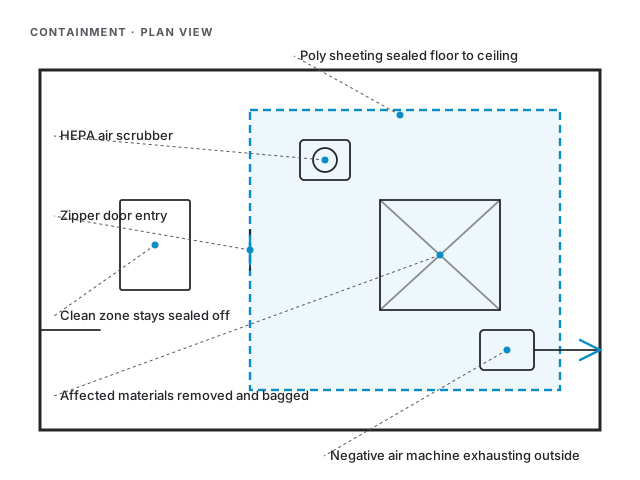
Plastic sheeting is taped floor to ceiling around the work area, with a zipper door for entry. Vents and openings inside are sealed. In a small bathroom this may be just the doorway; in a larger job it can wall off part of a hallway or room.
Negative air starts
A machine exhausts air from inside containment through a HEPA filter, usually out a window. This keeps the work area under lower pressure than the rest of the house, so air leaks in, not out. HEPA air scrubbers may also run inside to clean the air during demolition.
Removal
Porous materials with growth, like drywall, insulation, carpet pad and some trim, are cut out, bagged inside containment and carried out sealed. Cuts usually go past the visible growth to reach clean material.
Cleaning
Framing, subfloor and other hard materials that stay are HEPA vacuumed, then wiped or scrubbed. Some surfaces get an antimicrobial treatment. Wood with deep staining may be sanded or encapsulated after cleaning.
Drying
If the framing is still wet, dehumidifiers run until readings show it's dry. Nothing gets closed up wet.
Final cleaning and clearance
The whole containment gets a detailed clean. Then the area is checked visually, and often sampled for clearance, before the plastic comes down.
What it's like living around it
- Noise
- Air scrubbers and dehumidifiers make a steady fan noise, often around the clock, similar to a loud box fan.
- Access
- The contained area is off limits. Please don't unzip the door or move equipment.
- Smell
- You may notice a light odor from cleaning products. The musty smell often fades as moldy material comes out.
- Dust
- Containment and negative air are there to keep dust inside the work area. If you see plastic loosened or torn, say so right away.
- Windows
- One window near the work area may be used for the exhaust duct.
In apartments and condos with shared walls and stacked plumbing, neighbors or building management may need notice, especially if the source is in another unit.
Questions worth asking along the way
A good remediation contractor expects questions. These are the ones that tell you the most about how the job is going:
- Has the moisture source been fixed? If not, who is fixing it and when? Remediation on an active leak won't hold.
- How far past the visible growth are you cutting? The answer should be based on moisture readings and what's found once the wall is open.
- What did you find when you opened it up? Hidden growth is common. You should hear about it before the scope changes, not after.
- Are the materials dry? Ask to see the moisture readings before anything gets closed up.
- How will clearance be confirmed? A visual check, lab sampling, or both, and who does it.
After the work
When clearance is confirmed, containment comes down and the area is left clean, dry and open. Rebuild, with new insulation, drywall and paint, follows as a separate step. Before walls close, it's worth confirming the source repair is done: the plumber's fix, the roof patch, or the bath fan venting properly.
How many days all of this takes depends on size, drying and lab timing. We break that down in how long mold remediation takes.
Keep an eye on the area for the next few months, especially through the first winter rains. A musty smell returning or a new stain is worth a call.
Questions before, during or after? Call us at (424) 479-7915. The phone is answered 24 hours a day.
Seeing or smelling mold? Call and describe what you're dealing with. We'll tell you what it likely means and arrange an inspection. Phone answered 24/7.
Dealing with mold right now?
Talk to a mold remediation specialist
If this guide sounds like what's happening in your home or building, call us and we'll talk it through. You can also read how we handle mold remediation.
Phone answered 24 hours a day, 7 days a week