
Attic mold removal
Attic Mold Removal in Los Angeles
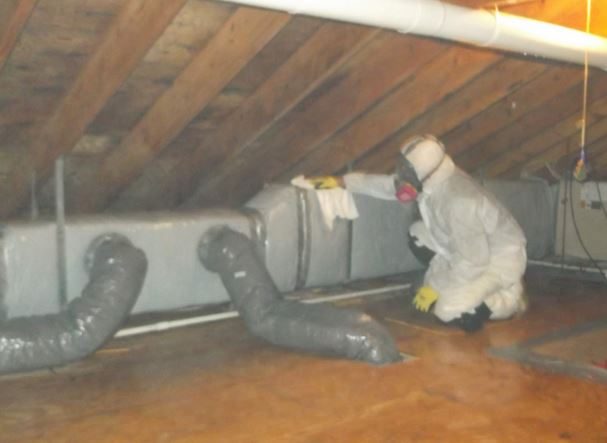
Mold on roof sheathing, rafters and insulation removed from the attic, along with the leak, ventilation gap or AC condensation that let it grow.
Phone answered 24 hours a day. Talk to a remediation specialist now.
- Moisture source found and fixed
- Containment + HEPA filtration
- Homes and commercial
Why attics grow mold
An attic is a closed space right under the roof. When warm, damp air or leaking water gets in and can't get out, the underside of the roof sheathing becomes the first cold, wet surface it reaches. Mold follows.
Attic mold usually shows up as dark staining or fuzzy spots on the sheathing and rafters, often in patches rather than evenly. You may notice a musty smell in upstairs rooms, stained ceiling drywall, or rusted nail tips poking through the roof deck.
Our post on what causes attic mold covers the causes in detail. Below is how we find the cause in your attic and take care of the growth.
Los Angeles attics
The usual sources
Most LA attics stay dry for much of the year. When mold does appear, one of these is usually behind it.
- Roof leaks
- Winter storms find failed flashing, cracked tiles and worn seams. Flat and low-slope roofs on mid-century and Spanish-style homes are especially prone to slow leaks that go unnoticed.
- AC in the attic
- Many LA homes have the air handler and ducts in the attic. A clogged or disconnected condensate line, a rusted drain pan or sweating ducts can wet the framing and insulation around them.
- Exhaust fans venting into the attic
- Bathroom and kitchen fans that end in the attic instead of outside dump moist air straight onto the sheathing.
- Blocked ventilation
- Insulation packed against the eaves, painted-over vents or too few vents keep humid air trapped.
- Coastal humidity
- Near the ocean, the marine layer brings more moisture into poorly ventilated attics than in the drier inland valleys.
If the growth followed a storm, our guide to mold after a roof leak explains what else to check.
Our attic mold removal process
Inspect and measure
We map where the growth is, take moisture readings in the sheathing and framing, and look at vents, fans, the roof deck and any AC equipment to find the cause.
Isolate the attic
The attic hatch and ceiling openings are sealed off from the living space. Negative air pulls attic air outward so dust doesn't come down into the rooms.
Remove wet or contaminated insulation
Affected insulation is removed and bagged. Removing it also exposes the ceiling joists and top plates so they can be inspected.
Clean the wood
Sheathing and rafters are HEPA vacuumed and cleaned. Depending on the attic, that may mean hand scrubbing, sanding or blasting. The table below compares the options.
Treat, dry and verify
Once the wood is clean and dry, a treatment or sealing coat may be applied. A final visual check and, if you want it, clearance sampling confirm the work.
Correct the cause
The roof repair, fan venting, ventilation changes or AC drain fix gets done, so the attic stays dry. We tell you what needs a roofer or HVAC technician.
Seeing or smelling mold? Call and describe what you're dealing with. We'll tell you what it likely means and arrange an inspection. Phone answered 24/7.
Cleaning methods for attic wood
The right method depends on how much growth there is, attic height and access, and what is stored nearby.
| Method | Best for | Trade-offs |
|---|---|---|
| HEPA vacuum and hand cleaning | Light, patchy growth in a small area | Slow over a large roof deck; hard in low attics |
| Sanding or wire brushing | Stains that have gone into the wood surface | Dusty; needs good containment and HEPA capture |
| Media or dry ice blasting | Widespread growth over large areas of sheathing | More equipment and setup; very effective on rough surfaces |
| Encapsulating coating | Sealing cleaned, dry wood as a final step | Not a substitute for removal; never applied over active growth |
What affects the cost of attic work
Every attic is scoped after an inspection. These factors make the biggest difference:
- How much of the roof deck is affected
- Attic height, pitch and access: a low, tight attic takes longer
- How much insulation has to be removed and replaced
- The cleaning method the growth calls for
- Stored belongings that have to be moved out first
- Repairs to the cause: roofing, fan ducting or AC drain work
Signs to check for
- Musty smell in upstairs rooms or near the attic hatch
- Dark staining on the underside of the roof deck
- Frost-like white growth or rust on nail tips
- Damp, matted or discolored insulation
- Ceiling stains below the attic after rain
Related services and areas
Attic mold and duct problems often come together, so see HVAC and air duct mold removal if your system runs through the attic. If a roof leak also reached the rooms below, water damage mold removal covers the ceilings and walls. For a full picture of containment and cleanup, see our mold remediation page.
We handle attic mold in homes across Los Angeles, including Pasadena, Burbank and Long Beach. See the full service area list, or call (424) 479-7915. We answer 24 hours a day.
Questions homeowners ask
Is attic mold a problem if I never go up there?
It can be. Wet sheathing and framing weaken over time, damp insulation stops insulating, and attic air can be drawn into living spaces through ceiling gaps, light fixtures and leaky ducts. It is also something buyers' inspectors look for.
Does all the insulation have to come out?
Not always. Insulation that got wet or sits directly under active growth is removed. Dry insulation well away from the affected area can sometimes stay. The decision is made after moisture readings, not before.
Can you just spray the attic and leave it?
Spraying on its own doesn't remove growth. Treatments and encapsulating coatings have a place after cleaning, but applying them over mold that is still there, or over wood that is still wet, doesn't fix the problem.
Why is there mold on only one side of my roof?
Patterns like that point to a cause. Growth near one bathroom fan, around one roof penetration, or along the cooler side of the roof usually reflects a local moisture or airflow problem rather than a whole-attic issue.
Talk to a specialist
Call about your mold problem
Tell us what you're seeing, smelling or worried about. We'll ask a few questions, explain what it likely means, and arrange an inspection and a written scope.
(424) 479-7915Phone answered 24 hours a day, 7 days a week
Call now, 24/7- We find and fix the moisture source, not just the stain
- Containment and HEPA filtration to keep spores out of clean rooms
- Homes and commercial properties across Los Angeles