
Usually removed
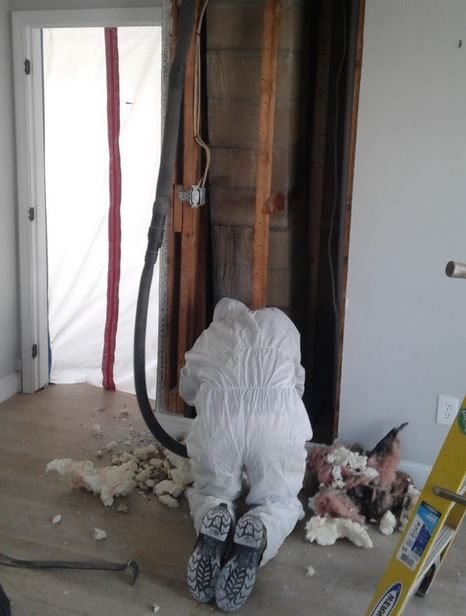
Drywall and insulation with growth or that stayed wet too long, carpet pad, ceiling tiles, particleboard cabinet bases and anything soaked by sewage or dirty floodwater.
Water damage mold
A burst line, a roof that gave way in a storm or a drip nobody noticed: once materials stay wet, mold follows. We deal with the mold part, and with making sure the water that caused it is really gone.
Phone answered 24 hours a day. Talk to a remediation specialist now.
Mold needs moisture, something to feed on and time. Drywall paper, wood, carpet backing and dust provide the food. A leak provides the moisture. Everything after that is a question of how long materials stay wet.
That's why mold after water damage is so common, and why it often shows up weeks after the water seemed to be dealt with. The visible puddle was dried. The wall cavity wasn't.
General guidance from the EPA is to dry wet materials within about 24 to 48 hours. Here's why it matters.
| Stage | What's usually happening | What it means for you |
|---|---|---|
| First day or two | Materials are wet; growth has usually not established | Fast drying can often prevent mold altogether |
| Several days wet | Growth can begin on drywall, carpet pad and wood | Porous materials that stayed wet may need removal |
| Weeks or longer | Growth spreads inside cavities; musty smell develops | Containment and full remediation are likely |
| Slow, ongoing leak | Repeated wetting over months, often hidden | Damage extends further than the visible stain |
The type of water and the material both matter.
Drywall and insulation with growth or that stayed wet too long, carpet pad, ceiling tiles, particleboard cabinet bases and anything soaked by sewage or dirty floodwater.
Wood studs and joists, plywood subfloor in sound condition, tile, concrete, metal and other hard surfaces. These are HEPA-vacuumed, cleaned and dried.
Hardwood flooring, cabinets, furniture and personal items. Some can be dried and cleaned; others can't be saved once mold has set in.
The full sequence of containment, removal, cleaning and clearance is laid out on our mold remediation page.
Seeing or smelling mold? Call and describe what you're dealing with. We'll tell you what it likely means and arrange an inspection. Phone answered 24/7.
Los Angeles leaks
Slow drips and failed supply lines under sinks, behind toilets and in walls are the most common indoor cause. In apartments and condos, stacked plumbing means one leak can affect several units.
Most of the year is dry, then the rainy season brings occasional heavy storms. Flat and low-slope roofs, window frames and cracks in stucco let water in, and stucco can hide wet sheathing for a long time. Our guide to mold after a roof leak covers what to check.
AC condensate lines and ducts often run through attics. A clogged or disconnected line can soak ceiling drywall from above. See attic mold removal.
On raised foundations, a leaking drain line can wet the soil and framing for months. That's covered on the crawl space page.
A few steps in the first hours make a real difference to how much has to be removed later.
Some common reactions make a mold problem bigger rather than smaller.
If anyone in the home has asthma, allergies or a weakened immune system, the CDC suggests talking to a doctor about mold exposure, and keeping them away from the affected area during cleanup is sensible.
More on how estimates work is on the cost page. If you're not sure how far the water went, a mold inspection is a sensible first step.
We work across the city and nearby areas including Long Beach and Burbank. See our service areas page for the full list. Leaks don't wait for business hours, and our phone is answered 24 hours a day.
The EPA's general guidance is to dry wet materials within about 24 to 48 hours, because wet materials that aren't dried quickly can start growing mold. Our post on the first 48 hours after a leak covers what to do right away.
Yes. The surface can dry while the inside of a wall, the bottom of the drywall or the insulation behind it stays wet. Mold can grow there without showing on the painted side. Moisture readings tell you more than looking does.
This service is focused on the mold side: assessing, removing and cleaning mold-affected materials and confirming the area is dry. If there is still standing water, tell us when you call and we'll talk through what needs to happen first.
In condos and apartments, water often comes through shared walls or from the unit above. Document what you see with photos, notify the building manager or HOA, and see our commercial and multi-unit page for how those jobs are coordinated.
Talk to a specialist
Tell us what you're seeing, smelling or worried about. We'll ask a few questions, explain what it likely means, and arrange an inspection and a written scope.
(424) 479-7915Phone answered 24 hours a day, 7 days a week
Call now, 24/7