
Slow plumbing leaks
The most common cause indoors. A drip under a sink or behind a toilet can run for months before anyone sees a stain.
Mold remediation
Mold removal done in the right order: find the water, seal off the work area, take out what can't be saved, clean what can, and confirm the room is clear before anything gets rebuilt.
Phone answered 24 hours a day. Talk to a remediation specialist now.
Mold remediation is not wiping a wall. It is a controlled process for removing mold growth from a building without spreading spores into the rooms that are still clean, and for making sure the conditions that let it grow are gone.
Every job we take on in Los Angeles follows the same logic, whether it's a patch behind a bathroom vanity or a whole wing of a house after a slab leak. The size of the containment and the equipment change. The order of the work doesn't.
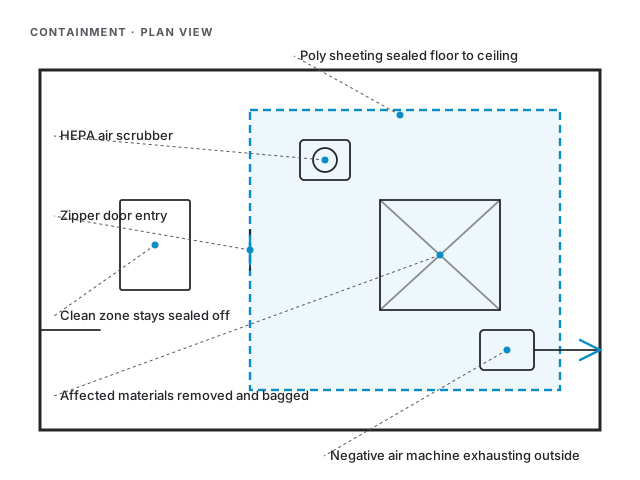
Ten stages. Some are quick on a small job, but none gets skipped.
We look at visible growth, check moisture levels in the surrounding materials and work out how far the damage likely extends behind walls, under floors or into the attic. If the extent isn't clear, a mold inspection comes first.
A dripping supply line, a failed shower pan, a roof leak from the last storm, AC condensate in the attic. Until that stops, anything we remove will grow back.
Plastic sheeting walls, sealed vents and a zipper door isolate the work area. Small jobs may need only a mini-containment around one wall.
A negative air machine with HEPA filtration pulls air out of the containment and exhausts it outside, so air leaks flow into the work area rather than out of it.
Drywall, insulation, carpet and pad, and ceiling tiles with growth are cut out past the visible edge, bagged inside the containment and carried out sealed.
Exposed framing, subfloor and every surface inside the containment are vacuumed with HEPA equipment to pick up spores and debris.
Hard materials that can stay, such as studs and joists, are scrubbed or sanded where growth has stained the surface, then wiped down.
Dehumidifiers and air movement bring framing and subfloor back to normal moisture levels, which we check with a meter rather than by feel.
A visual check, moisture readings and, where you want it, independent post-remediation testing before containment comes down.
Once clear, the area is ready for insulation, drywall and finishes. We tell you exactly what was removed so the rebuild is scoped correctly.
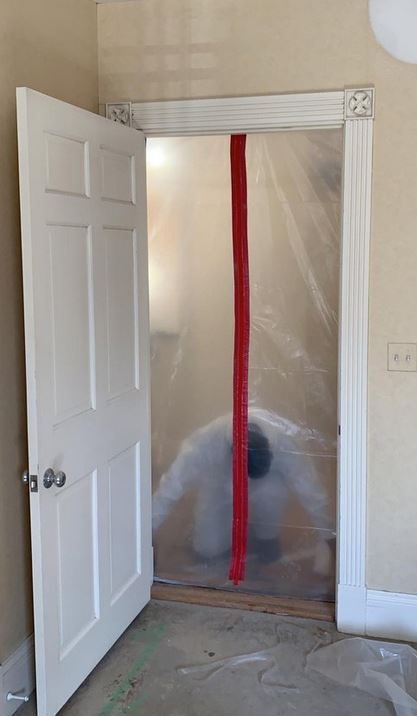
The biggest question on most jobs is what has to go. The rule of thumb is simple: porous materials with growth come out, and solid materials usually get cleaned.
| Material | Usual approach |
|---|---|
| Drywall with growth | Cut out past the affected area |
| Insulation | Removed and bagged |
| Carpet and pad | Removed if wet long enough to grow mold |
| Wood framing | HEPA-vacuumed, cleaned, sanded if stained |
| Tile, metal, glass | Cleaned in place |
| Furniture and contents | Case by case; hard items cleaned, soft items assessed |
Seeing or smelling mold? Call and describe what you're dealing with. We'll tell you what it likely means and arrange an inspection. Phone answered 24/7.
Local conditions
The most common cause indoors. A drip under a sink or behind a toilet can run for months before anyone sees a stain.
A dry climate most of the year, then heavy rain finds flat roofs, window frames and stucco cracks. Mold shows up weeks later.
Near the ocean, marine-layer moisture keeps closets, bathrooms and north-facing walls damp longer than in the inland valleys.
Ducts and AC lines run through attics, and many older homes sit on raised foundations. See attic mold removal and crawl space mold removal.
We scope each job from what we find on site. These are the factors that change it most.
The mold remediation cost page explains how estimates are built and how to compare them.
The surface was cleaned but the leak or the growth inside the wall wasn't dealt with.
Usually poor ventilation, sometimes a leak from above. Our bathroom mold removal page covers both.
Hidden growth is common after water damage. The mold after water damage page explains where it hides.
We handle mold remediation across Los Angeles and nearby cities, from coastal Santa Monica to the valley neighborhoods of Glendale and Pasadena. The full list is on our service areas page. Our phone is answered 24 hours a day, so call whenever you find the problem.
Often, yes. When the affected area is contained and under negative air, the rest of the house usually stays in use. It depends on where the work is, how big it is, and whether anyone in the home has asthma, allergies or other health concerns. If you do, talk to your doctor and tell us when you call so we can plan around it.
Spraying and painting hide the stain but leave the growth and the moisture behind it. Mold in porous materials like drywall and insulation has to be removed, and the surfaces left behind have to be physically cleaned. Our post on why bleach doesn't fix mold goes into the details.
Finding and stopping the moisture source is part of every job, because remediation without it just resets the clock. Some repairs, such as a plumbing line or a roof section, may need the right trade. We tell you what we found and what has to happen before the area is closed up.
The EPA's general guidance is that small areas, roughly 10 square feet or less, are often manageable by a homeowner if the moisture is fixed. Larger areas, growth inside walls or ducts, recurring mold and situations involving sensitive occupants are where professional containment makes sense.
Talk to a specialist
Tell us what you're seeing, smelling or worried about. We'll ask a few questions, explain what it likely means, and arrange an inspection and a written scope.
(424) 479-7915Phone answered 24 hours a day, 7 days a week
Call now, 24/7