
Musty smell in the house
Nothing visible indoors, but the smell is strongest near floor vents or in closets. Crawl space air moving up through gaps is a common reason. A mold inspection can confirm where it's coming from.
Crawl space mold
Many older Los Angeles homes sit on raised foundations, and the crawl space underneath is where slow leaks, ground moisture and poor airflow quietly feed mold on joists and subfloor.
Phone answered 24 hours a day. Talk to a remediation specialist now.
A crawl space is a dark, shallow void between the ground and your floor. It has bare soil or a thin slab below, wood framing above, and plumbing, drains and often ductwork running through it. Add moisture and very little air movement and it's close to ideal for mold.
Most homeowners never go down there, so problems run for a long time. By the time a smell reaches the living room, growth has often spread across a whole run of joists.
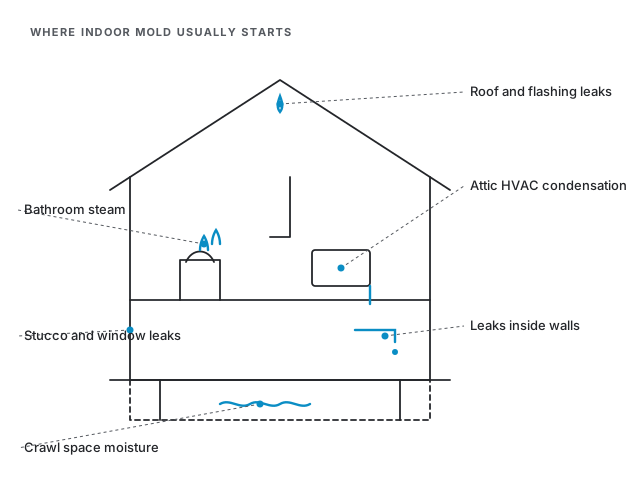
Crawl space mold almost always traces back to one of these. Often it's two at once.
| Source | What it looks like | What fixes it |
|---|---|---|
| Plumbing leaks | Wet soil or staining under a bathroom, kitchen or laundry; growth concentrated around one area | Repair of the supply or drain line, then drying |
| Ground vapor | Even, widespread growth; damp soil with no single leak | An intact vapor barrier over the soil |
| Poor ventilation | Blocked or buried vents, stale damp air, condensation on pipes | Clearing and restoring airflow, or a planned alternative |
| Surface drainage | Water after winter storms, especially on hillside lots | Gutters, downspouts and grading that move water away |
| Ductwork | Condensation or disconnected ducts blowing into the space | Duct repair; see HVAC mold removal |
We check framing, insulation, soil, vents, plumbing and ducts, take moisture readings on the wood and note where growth is heaviest.
Leaks get repaired and drainage issues identified before cleaning starts. There's no point cleaning joists that will be wet again next month.
The access hatch and any openings into living space are sealed, and negative air pulls from the crawl space and exhausts outside.
Moldy insulation, debris and failed vapor barrier come out in sealed bags.
Joists, beams and subfloor are HEPA-vacuumed and cleaned, with sanding where staining is heavy. The same approach used in our full remediation process, adapted to working on your back.
Framing is dried to normal moisture levels and checked before new insulation or barrier goes in.
Seeing or smelling mold? Call and describe what you're dealing with. We'll tell you what it likely means and arrange an inspection. Phone answered 24/7.
Los Angeles homes
Raised foundations are common in older neighborhoods across Los Angeles, from bungalows and Spanish-style homes to mid-century houses. Many have original plumbing, vents that have been blocked by landscaping over the years and little or no vapor barrier.
Near the coast in places like Santa Monica and Long Beach, the marine layer keeps crawl space air damp for more of the year. Inland, the air is drier, so growth there usually points to a leak or a drainage problem.
On sloped lots, rain runs toward the uphill side of the foundation. When the winter storms arrive, water can soak soil under the house for days.
Homes that were added onto may have a crawl space under one part and a slab under another, with the joint between them a common place for water to collect.
No two crawl spaces are the same size or height. These drive the scope.
See the remediation cost page for how estimates are put together.
Nothing visible indoors, but the smell is strongest near floor vents or in closets. Crawl space air moving up through gaps is a common reason. A mold inspection can confirm where it's coming from.
Batts between the joists absorb moisture, get heavy and fall. Wet insulation holds water against the subfloor and is usually where growth is heaviest.
A leak was fixed but the soil and framing beneath it were never dried. Months later, the joists around the repair show mold. See mold after water damage.
We work under homes throughout Los Angeles and surrounding cities. See our service areas page for the full list, or call us any time. The phone is answered 24 hours a day.
Air moves upward through a house, and gaps around pipes, ducts and floor penetrations let crawl space air into living areas. That's why a musty smell in the house is often the first sign of a crawl space problem. Sealing those gaps is usually part of the work.
Usually not. Surface mold on sound framing is removed by HEPA vacuuming and cleaning, with sanding where the wood is stained. Replacement comes up when wood is soft from long-term moisture or rot, which is a structural question rather than a mold one.
Not without a plan. Vents, vapor barriers and any mechanical drying work as a system, and closing vents on a damp crawl space can make things worse. We'll tell you what we see under your house and what options make sense before anything changes.
Common signs are a musty smell in the house, white or dark growth on joists, damp or sagging insulation, and standing water or wet soil. Our guide to crawl space moisture in raised-foundation homes covers what to look for.
Talk to a specialist
Tell us what you're seeing, smelling or worried about. We'll ask a few questions, explain what it likely means, and arrange an inspection and a written scope.
(424) 479-7915Phone answered 24 hours a day, 7 days a week
Call now, 24/7