
Ceiling mold over the shower
Nearly always ventilation. Clean it, then fix how the fan is sized, where it vents and how long it runs, or it will be back.
Bathroom mold removal
When bathroom mold keeps coming back, or the smell points to something behind the tile, we find out how deep it goes and remove it properly.
Phone answered 24 hours a day. Talk to a remediation specialist now.
Nearly every bathroom grows a little mold. What matters is whether it sits on the surface or has worked its way in.
| What you see | Likely surface issue | Likely hidden issue |
|---|---|---|
| Dark grout lines | Cleans up and stays clean for weeks | Comes back within days, or grout is cracked or crumbling |
| Spots on the ceiling | Small spots over the shower from steam | Spreading stain, sagging or soft drywall |
| Black caulk line | Growth on the caulk surface | Growth under the caulk and a gap behind it |
| Musty smell | Goes away after cleaning and airing out | Persists even when the room looks clean |
| Floor near the tub or toilet | Surface staining on grout | Soft subfloor, loose tile, or stains on the ceiling below |
The EPA's general guidance is that small areas, roughly 10 square feet or less, can often be handled by a homeowner, while larger or hidden growth warrants a professional. Our guide to preventing bathroom mold covers the ventilation, caulk and daily habits that keep surface mold under control.
No exhaust fan, a fan too small for the room, or one that's switched off right after the shower leaves the walls and ceiling wet for hours every day.
Cracked grout, failed caulk at the tub and a missing or damaged waterproofing layer let water reach the wall board and framing.
Older mortar-bed showers can leak through the pan and wet the subfloor for years without showing much from above.
Supply lines, the toilet wax ring, the tub drain and the valve behind the shower wall are all common sources of slow leaks.
In LA apartments and condos, bathrooms are often stacked floor over floor. A leak in the unit above can show up as mold on your ceiling, and your shower can affect the unit below.
A fan that vents into the attic just moves the moisture upstairs. See attic mold removal if that is what's happening.
Moisture meter readings around the tub, shower and toilet, a look at the grout and caulk, and a check of the ceiling below if there is one.
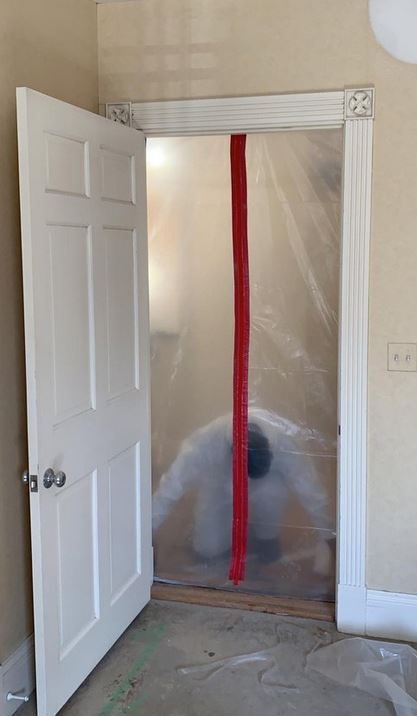
For anything beyond surface cleaning, the doorway is sealed with plastic and a zipper door, and a negative air machine keeps dust out of the hallway.
Moldy caulk, damaged drywall, wet wall board behind tile and saturated subfloor are cut out and bagged.
Framing and remaining surfaces are HEPA vacuumed and cleaned, then dried until moisture readings are back to normal.
A final inspection, and clearance testing where needed, confirm the room is ready for new waterproofing, board and tile.
Seeing or smelling mold? Call and describe what you're dealing with. We'll tell you what it likely means and arrange an inspection. Phone answered 24/7.
Bathroom jobs vary more than most, because so much depends on what is behind the finish.
Nearly always ventilation. Clean it, then fix how the fan is sized, where it vents and how long it runs, or it will be back.
Water getting through the shared wall. The shower side usually needs opening to find out how far it went.
Water behind a surround or a slow drain leak. Dark growth inside the wall is dealt with the same way as any other black mold removal.
Removing the mold is half the job. The bathroom has to dry out after every shower, or the same growth returns on the new grout and paint. Before the room is rebuilt, we go over the changes that make the biggest difference:
We remove bathroom mold in houses, condos and apartments across Los Angeles, including Santa Monica and Beverly Hills. For rental buildings, see commercial mold remediation. Not sure how far the problem goes? A mold inspection is the place to start. Check our service areas, or call (424) 479-7915 any time.
Grout is porous and caulk can trap moisture behind it, so surface cleaning never reaches all of it. Short fan run times and a shower that never fully dries make it worse. Recaulking and better ventilation help, but if the growth returns quickly, check for water getting behind the tile.
Warning signs include loose or hollow-sounding tiles, cracked or missing grout lines, a musty smell that cleaning doesn't remove, staining on the wall on the other side of the shower, or a ceiling stain in the room below.
Often, yes. Surface growth on tile, grout, caulk and painted ceilings can be cleaned. The shower only has to come apart when the wall behind it or the pan under it is wet and growing mold. We confirm that before recommending demolition.
Only after the growth is removed and the moisture problem is solved. Paint on its own over existing growth or damp drywall just hides it for a while.
Talk to a specialist
Tell us what you're seeing, smelling or worried about. We'll ask a few questions, explain what it likely means, and arrange an inspection and a written scope.
(424) 479-7915Phone answered 24 hours a day, 7 days a week
Call now, 24/7