
A musty smell that comes back
An earthy odor in one room, a closet or a cabinet under a sink, especially after the house has been closed up, is often the first clue to growth behind a surface.
Mold inspection
A hands-on investigation of your home or building to find where the moisture is coming from, what materials it has reached and how much needs to be removed.
Phone answered 24 hours a day. Talk to a remediation specialist now.
Mold is a symptom. The problem underneath it is water: a slow drip in a wall, a roof flashing that lets winter rain in, a bathroom that never dries out. A mold inspection is the work of finding that water and following it until we know where the growth starts and where it stops.
That answer decides everything that follows. It tells you whether you are looking at a small patch you can clean yourself or a job that needs containment, and it keeps a remediation from missing the part of the problem nobody could see.
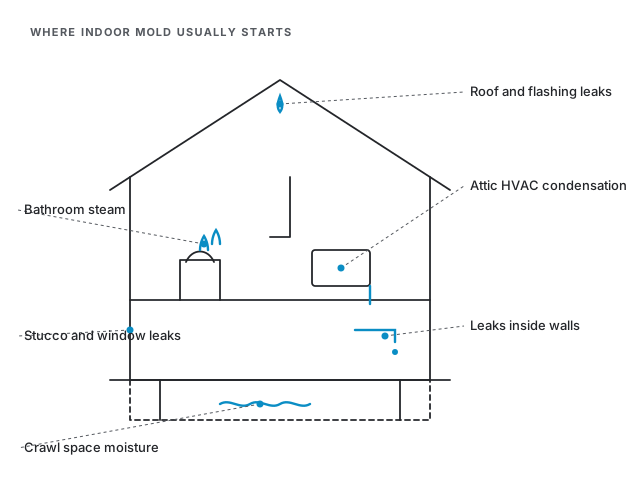
You do not need to see mold to have a mold problem. These are the signals that usually justify a closer look.
An earthy odor in one room, a closet or a cabinet under a sink, especially after the house has been closed up, is often the first clue to growth behind a surface.
Yellow or brown rings on a ceiling, paint that blisters, baseboards that swell or flooring that lifts all point to water that has been there longer than a day or two.
A repaired pipe or roof stops new water, but it does not dry the insulation and framing that got wet. If nobody checked the cavity afterward, it is worth checking now.
Before closing on an older home or turning over a unit, an inspection gives you a clear picture of any moisture history instead of guesses. Our guide to signs of hidden mold covers more clues to watch for.
Most visits follow the same order, adjusted to the building and what you have noticed.
When the smell started, past leaks, recent repairs, who in the home has been bothered by it. Details like these save a lot of searching.
We look at gutters, grading, stucco cracks, window flashing and roof transitions, because many interior problems begin outside.
Affected areas first, then adjoining rooms, the floor below and the space above. Moisture meters and a thermal camera guide where we spend time.
Water heater closets, under-sink cabinets, the air handler and its condensate line, and any attic or crawl space access.
Where readings point to a wet cavity, we may ask to make a small inspection opening or use a borescope so the scope is based on what is actually there.
We walk you through the source, the affected materials and the recommended scope, and tell you whether sampling would add anything useful.
Seeing or smelling mold? Call and describe what you're dealing with. We'll tell you what it likely means and arrange an inspection. Phone answered 24/7.
An inspection should end with answers you can act on, not a vague warning.
Los Angeles conditions
The climate is mild and mostly dry, but winter storms find every weak point. Flat and low-slope roofs on mid-century and Spanish-style homes, window frames and roof transitions are where we see leaks start.
Stucco can look sound while the sheathing behind it stays damp. Staining at the bottom of an exterior wall or a musty closet on an outside wall gets a careful look.
Near the ocean, the marine layer keeps humidity higher, so poorly ventilated rooms and closets stay damp longer. Inland valleys run hotter and drier, where the usual culprits are plumbing leaks and AC condensation. Our post on marine layer humidity and mold goes deeper.
Older homes on raised foundations need the crawl space checked. In apartments and condos, stacked plumbing means the source can be a unit above or next door.
We quote after hearing what is going on. These factors drive the time an inspection takes.
| What you notice | What we often find |
|---|---|
| Musty smell under the kitchen sink | A slow drip at a supply line or drain fitting that has soaked the cabinet floor and the wall behind it |
| Dark spots on a bedroom ceiling | A roof leak or a bathroom exhaust fan venting into the attic; see attic mold removal |
| Stained grout and peeling paint in the bathroom | Poor ventilation, and sometimes a failed shower pan; see bathroom mold removal |
| Smell when the AC runs | Growth on the evaporator coil or drain pan, or damp duct insulation |
We inspect homes, apartments and commercial spaces across Los Angeles and nearby cities, including Santa Monica, Pasadena and Long Beach. The full list is on our service areas page. Our phone is answered 24 hours a day at (424) 479-7915.
An inspection is an investigation: we look, measure moisture and trace the water to find the source and the extent of growth. Testing means collecting air or surface samples for a lab to analyze. Many homes need only the inspection. Our mold testing page explains when sampling adds useful information.
Not usually at the start. Moisture meters and thermal imaging tell us where to look, and a small inspection opening is made only when readings point to a wet cavity and you agree to it. The goal is to confirm, not to demolish.
It is better to leave it. The pattern of growth helps show where the water came from, and scrubbing or spraying it can spread spores. Keep the area closed off, run a fan to the outside if you can, and call us.
Often it can find the conditions that cause it. Hidden growth almost always sits next to moisture, so elevated readings, staining patterns, odor and the location of plumbing or roof penetrations narrow down where concealed mold is likely.
Talk to a specialist
Tell us what you're seeing, smelling or worried about. We'll ask a few questions, explain what it likely means, and arrange an inspection and a written scope.
(424) 479-7915Phone answered 24 hours a day, 7 days a week
Call now, 24/7