
Beneath bungalows
Leaking drains, damp soil and poor venting under the floor can grow mold on joists and subfloor.
Crawl space remediationLong Beach, California
Long Beach combines ocean air with an older housing stock of bungalows, courtyard apartments and condo towers. We track mold back to crawl spaces, stacked plumbing and storm leaks, then remove it under containment.
Phone answered 24 hours a day. Talk to a remediation specialist now.
Long Beach is a large coastal city with a lot of older housing: small bungalows on raised foundations, courtyard and garden apartment buildings, and condo buildings where kitchens and bathrooms stack directly above one another. Neighborhoods along the water, such as Belmont Shore, get the full effect of the marine layer and ocean wind.
Plenty of these buildings have been renovated in stages, so a unit may have a newer kitchen next to an original bathroom with decades-old drain lines behind the tile.
That mix means two sets of problems. Coastal humidity keeps closets, bedrooms and bathrooms damper than they'd be inland. Age means plumbing, windows and roofs are more likely to fail, and in a building with many units, one failure can affect several homes.
Typical spots in Long Beach homes and buildings:
Between raised foundations and multi-unit buildings, the source is often out of sight.
Leaking drains, damp soil and poor venting under the floor can grow mold on joists and subfloor.
Crawl space remediationStacked plumbing leaks and repeat complaints across units call for a single plan for the whole building.
Commercial and multi-unit mold workWet drywall, insulation and flooring need attention before growth takes hold inside the wall.
Water damage and moldClearance sampling after the work gives owners, buyers or an HOA something concrete to go on.
Post-remediation testingMost of the year, Long Beach is mild and dry. During winter storms, though, wind off the ocean can drive rain sideways into window frames, door thresholds and stucco cracks that stay dry in calmer weather. Older windows and worn caulking are the usual entry points, and the water often ends up inside the wall below the sill.
Condo and apartment buildings add a vertical dimension. When a shower pan, toilet seal or drain line fails in one unit, water runs down through the ceiling cavity and walls of the units below. The unit with the visible stain isn't always the unit with the leak.
That's why we start with an inspection that follows the moisture rather than only cleaning what you can see. If the source isn't found and fixed, the growth tends to return.
For owners, a written record of where the moisture came from also helps when a neighbor, an association or a future buyer asks what happened.
Seeing or smelling mold? Call and describe what you're dealing with. We'll tell you what it likely means and arrange an inspection. Phone answered 24/7.
Long Beach specifics
Condo work usually involves the association as well as the owner. Share contact details for the manager when you call, and we'll coordinate access to common areas and any units above or below.
Street parking along the beach neighborhoods can be scarce. Alley access, a garage space or a loading zone makes equipment delivery much easier.
Older bungalows may have an access hatch in a closet floor or on the outside wall behind plants. Knowing where it is before the visit saves time.
Most occupants stay put while one area is sealed off. We explain which rooms are closed, where equipment will run and how noise and air movement are handled.
We inspect the affected unit and, where needed, the units or crawl space above and below it.
A written scope goes to the owner, the association or both, with the repairs that must happen before the source is closed off.
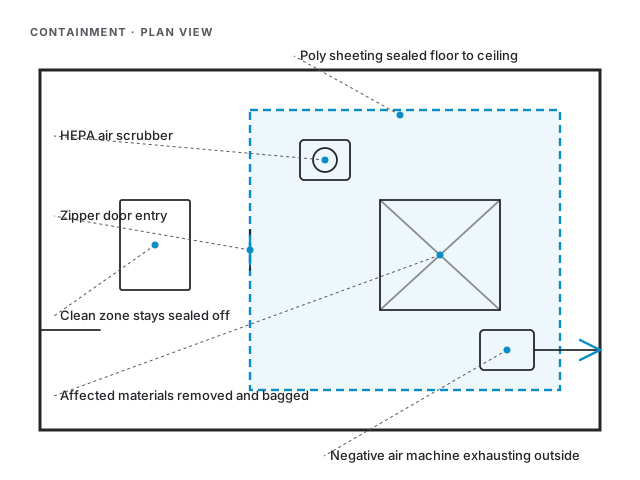
The work area is sealed and put under negative air while affected materials are removed and surfaces are HEPA cleaned.
Materials are confirmed dry, clearance testing can be arranged, and the space is handed back for repairs.
We also handle mold remediation across Los Angeles, from the coast to the valleys. Browse the list of service areas to see the cities we cover.
In stacked buildings, a bathroom often sits directly under or beside another unit's bathroom. If the growth returns after cleaning, the cause may be a leak in a shared drain or a neighbor's shower pan rather than steam alone. Moisture readings in the wall and ceiling help locate it.
Not necessarily, but they have one more place for it to hide. Near the coast, damp air and a leaking pipe under the floor can keep a crawl space wet. It's worth looking underneath every few years, and after any plumbing leak.
It depends on where the damage is and what your association's documents say. Common walls, roofs and shared pipes may fall to the HOA; the inside of a unit may fall to the owner. We can inspect and describe what we find so the right party can make that call.
Talk to a specialist
Tell us what you're seeing, smelling or worried about. We'll ask a few questions, explain what it likely means, and arrange an inspection and a written scope.
(424) 479-7915Phone answered 24 hours a day, 7 days a week
Call now, 24/7