
Condensate lines
The line that carries water away from the AC coil can clog, crack or disconnect. A full or rusted drain pan under the unit is a warning sign.
Attics
Attic mold almost always traces back to one of a handful of moisture sources. Find which one is feeding it and you know what has to change before cleanup can last.
Attic mold is caused by moisture that reaches the roof framing and doesn't dry out. In Los Angeles homes, the usual sources are roof leaks during the winter rainy season, bathroom or kitchen fans that exhaust into the attic instead of outdoors, blocked or inadequate attic ventilation, and condensation from air conditioning equipment and ducts that run through the attic. Often it's two of these working together.
Mold on attic wood is usually a symptom. Cleaning it without dealing with the cause tends to buy a season or two before it returns.
A leak is the most direct route for water into an attic. Southern California's dry months hide small roof problems, and the first heavy storm of winter exposes them. Flashing around chimneys, vents and skylights, worn underlayment, and cracked tiles are common entry points.
Flat and low-slope roofs, which are common on mid-century and Spanish-style homes around LA, deserve extra attention. Water drains slowly, ponds in low spots and finds its way through tired membranes and seams. The damage often shows up well away from where the water got in, because it runs along framing before it drips.
For what to check after a storm, see mold after a roof leak.
This one surprises a lot of homeowners. Bathroom fans, and sometimes kitchen hoods or dryer vents, are installed with ducts that end in the attic, or ducts that have come loose over the years. Every shower then sends warm, wet air straight onto cooler roof sheathing.
The pattern is easy to recognize once you know it: heavy growth concentrated directly above a bathroom, sometimes with a disconnected flex duct lying in the insulation nearby. The fix is to run the duct to a proper roof or wall cap. Cleaning the wood without rerouting the fan is wasted effort.
Attics are meant to exchange air with the outdoors, usually through vents low at the eaves and high near the ridge or gables. That airflow carries off moisture that drifts up from the house. When vents are blocked or were never adequate, humid air lingers and condenses on the underside of the roof.
Common culprits:
Ventilation-driven mold tends to look different from leak mold. It is usually spread fairly evenly across large areas of sheathing, often heavier on the side of the roof that gets less sun, rather than concentrated in one spot.
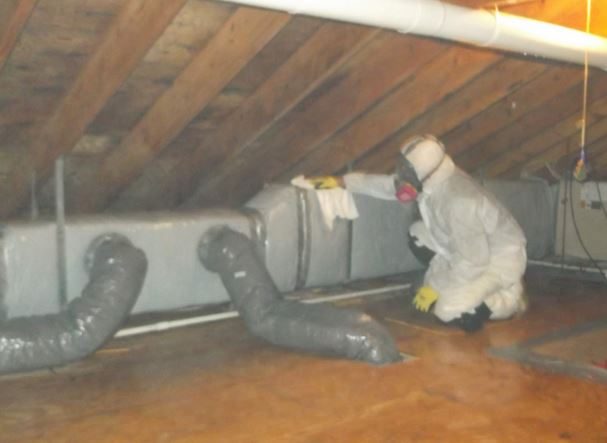
Many LA homes have their furnace, air handler or ductwork in the attic. In summer, cold ducts and equipment sit in a hot space, and any humid air touching them can condense. That moisture drips onto framing and insulation.
The line that carries water away from the AC coil can clog, crack or disconnect. A full or rusted drain pan under the unit is a warning sign.
Duct insulation with gaps or rips lets cold metal or liner sweat. Look for staining on the insulation below duct runs.
Conditioned air escaping into the attic changes temperature and moisture around the leak point, which can wet nearby wood.
When AC is part of the picture, the ducts themselves may need a look too. Our HVAC and air duct mold removal page covers what that involves.
A few less common sources round out the list. Water heaters or plumbing lines in the attic can leak. Air leaks from the living space through recessed lights, attic hatches and wiring holes carry household moisture upward. A home with high indoor humidity, from lots of cooking, drying laundry indoors or unvented appliances, puts more moisture into the attic through those same gaps.
Moving insulation or scraping wood spreads spores into the house through ceiling gaps. Look, take photos, and leave it alone.
Is the growth localized or widespread? Above a bathroom? Near a vent or duct? The pattern points to the cause.
Repair the roof, reroute the fan, clear the vents or service the AC drain. This comes before cleanup, or at least alongside it.
Attic growth often covers more than the roughly 10 square feet the EPA suggests as a rough limit for homeowner cleanup, and attics are hard, hot places to work safely.
Professional attic mold removal typically includes containment at the attic access, removal of contaminated insulation where needed, cleaning of framing and sheathing, and HEPA filtration while the work is underway.
Seeing or smelling mold? Call and describe what you're dealing with. We'll tell you what it likely means and arrange an inspection. Phone answered 24/7.
Dealing with mold right now?
If this guide sounds like what's happening in your home or building, call us and we'll talk it through. You can also read how we handle attic mold removal.
Phone answered 24 hours a day, 7 days a week