
After the storm
Mold After a Roof Leak
A roof leak soaks the attic before it shows on the ceiling. By the time you see a stain, insulation and framing above it may have been wet for days, and that is where mold starts.
What to check first
After a roof leak, check three places: the attic directly above the stain, the insulation and roof sheathing around the entry point, and the ceiling drywall itself. Mold grows where material stays wet, and a roof leak usually wets more material than the ceiling stain suggests, because water runs along rafters and spreads across insulation before it drips. The goal in the first few days is to find everything that got wet and get it dry, or get it out.
If the leak has been going on for a while, or you're already seeing spots or smelling something musty, the problem has moved past drying. Our page on mold after water damage explains what remediation looks like at that stage.
Why roof leaks are a Los Angeles problem
Most of the year the weather here is dry, so roofs can go a long time without being tested. Then the winter rainy season brings occasional heavy storms, and small failures that went unnoticed all summer start letting water in. A few patterns come up again and again:
- Flat and low-slope roofs. Common on mid-century and Spanish-style homes. Water sits instead of running off, and a small seam or drain failure lets it in slowly.
- Flashing at walls, chimneys and parapets. Where the roof meets a vertical surface is a frequent entry point.
- Stucco walls below the roofline. Water that gets behind stucco can travel down inside the wall and show up far from where it entered.
- Clogged gutters and scuppers. Debris from the dry season blocks drainage, and water backs up under the roofing.
- Hillside homes. Heavy runoff and drainage trouble can combine with roof leaks to wet walls from two directions.
A walk-through after the rain stops
Go into the attic
With a flashlight, look above any ceiling stain and along the roof sheathing for dark, damp wood, water trails on rafters, and wet or matted insulation. If you can safely reach, press on the insulation; wet insulation feels heavy and cold.
Check the ceiling below
Stains, sagging drywall, or bubbled paint and texture. A sagging ceiling may be holding water, so keep people and belongings out from under it.
Look at exterior walls
Inside, check the walls under the leak area and along any wall with a parapet or roof-to-wall joint. Look for stains near the top of the wall and swollen trim at windows.
Check closets and cabinets on those walls
Enclosed spaces with little airflow dry slowest and show growth first.
Note the smell
A musty odor in the attic or a top-floor room days after the storm means something is still wet.
What usually needs to happen
Stop the water
A roofer has to fix the leak. A tarp buys time during a storm but isn't a repair. Any mold work done before the roof is sealed is at risk of being undone by the next rain.
Dry or remove wet materials
Wet insulation rarely dries well in place and is usually removed. Roof sheathing and rafters can often be dried if caught early. Ceiling drywall that got soaked, sagged or stained through is usually cut out, since the back of the paper is where growth starts.
Deal with growth that's already there
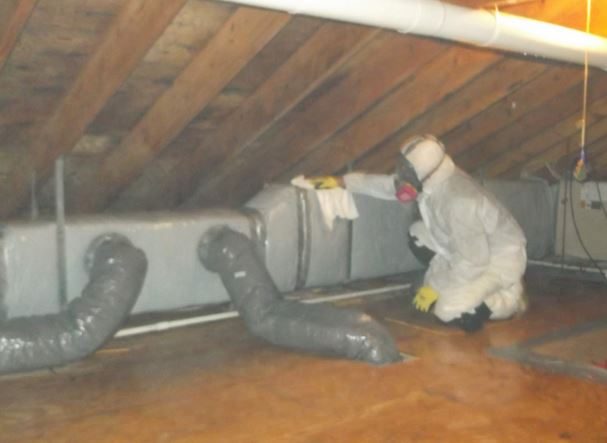
If mold has started on sheathing or framing, it needs to be cleaned under containment, not just sprayed. Attics add heat, tight access and ductwork to the job. Our attic mold removal page covers how that work is set up.
Don't forget the walls and windows
Roof leaks get the attention, but winter storms in Los Angeles push water in sideways too. Wind-driven rain gets past old window seals and through cracks in stucco, and a wall can take on water without any sign on the roof. Stucco holds moisture and dries slowly, so the inside face of the wall can stay damp long after the storm passes.
After heavy rain, check inside walls below windows for stains or swollen sills, feel for soft drywall near the floor on exterior walls, and look behind furniture pushed up against them. On hillside homes, check the uphill walls and any rooms partly below grade, where runoff can soak in from outside.
When to call a professional
- Visible growth covers more than a small patch. The EPA's general guidance puts the line at roughly 10 square feet.
- Insulation or ceiling drywall is soaked across a wide area.
- The leak was going for a while before you noticed it.
- There's a musty smell but you can't find the source, which usually calls for a moisture and mold inspection.
- The attic has HVAC ducts or equipment near the wet area.
If the leak is fresh, speed matters most. The steps for the first two days are in preventing mold after a leak. If you're past that point, or not sure, call (424) 479-7915. We answer 24 hours a day.
Seeing or smelling mold? Call and describe what you're dealing with. We'll tell you what it likely means and arrange an inspection. Phone answered 24/7.
Dealing with mold right now?
Talk to a mold remediation specialist
If this guide sounds like what's happening in your home or building, call us and we'll talk it through. You can also read how we handle mold after water damage.
Phone answered 24 hours a day, 7 days a week