
Rentals and apartments
Mold in Apartments and Rentals: A Practical Guide
Mold in a rental involves at least two people, a tenant and an owner or manager, and often a shared building. Things go more smoothly when both sides document clearly and focus on the moisture source.
What to do first
If you find mold in an apartment or rental, document it with dated photos, report it to the landlord or property manager in writing, and include any signs of a leak or moisture source you've noticed. Owners and managers should respond by arranging access, finding and repairing the moisture source, and having the growth cleaned up or removed properly. That sequence, document, report, fix the source, clean up, covers most situations regardless of who you are in the arrangement.
California has tenant habitability rules that can apply to mold and water problems. This guide doesn't cover the legal side. For specifics about rights and obligations, check with a local tenant or landlord resource, or talk to an attorney.
Why rentals are different
Mold in a single-family home is one owner's problem. In a rental, and especially in an apartment or condo building, it's more complicated:
- Shared walls and stacked plumbing. Many Los Angeles buildings have bathrooms and kitchens stacked floor over floor. A leak in one unit can show up as mold in the unit below or next door.
- Split responsibility. The tenant sees the problem day to day. The owner controls repairs and access to building systems.
- Access and scheduling. Work may require entering more than one unit, shutting off water to a stack or closing off part of a hallway.
- Everyday living. Tenant habits affect moisture, and building conditions affect what those habits can achieve.
For tenants: documenting and reporting
Document what you see
- Take clear, dated photos of the growth, with something for scale, and wider shots showing where it is in the room.
- Photograph anything that looks like a source: water stains, drips under the sink, a ceiling stain, a running toilet, a wet carpet edge.
- Note when you first noticed it and whether it's getting bigger.
- Keep damaged belongings, or photograph them before discarding.
Report it in writing
Use whatever channel your lease or building uses for maintenance requests, and keep a copy. Describe the location, size, any moisture you've seen, and when it started. Follow up in writing if nothing happens. A clear, calm written record helps everyone, including the manager who has to schedule the work.
Things to avoid
- Painting over mold or covering it with furniture
- Scrubbing large areas or tearing out drywall yourself
- Assuming it's only condensation if you've also seen stains or drips
Small spots on a bathroom ceiling or window sill can usually be cleaned with household cleaner while you report the issue. The EPA describes areas of roughly 10 square feet or less as often manageable by occupants, but in a rental the moisture source is still the owner's to fix.
For owners and managers: responding well
Acknowledge and schedule
Respond to the report and set a time to look. Give proper notice for entry and explain what the visit involves.
Find the source
Check plumbing in the unit, the unit above, and any shared walls. Look at bathroom fans, window seals, roof and exterior drainage. Surface mold with no source is uncommon.
Repair the source first
Fix the leak, replace the failed fan, reseal the window. Cleanup without repair tends to lead to a second complaint.
Assess the extent
If growth is large, hidden, or crosses into other units, bring in someone to inspect and scope the work before walls are opened.
Remediate properly
Containment, removal of damaged porous materials, HEPA cleaning and drying. Keep the tenant updated on schedule and what areas will be off-limits.
Close the loop
Confirm the area is dry and clean before rebuilding, and let the tenant know the work is done.
Coordinating in multi-unit buildings
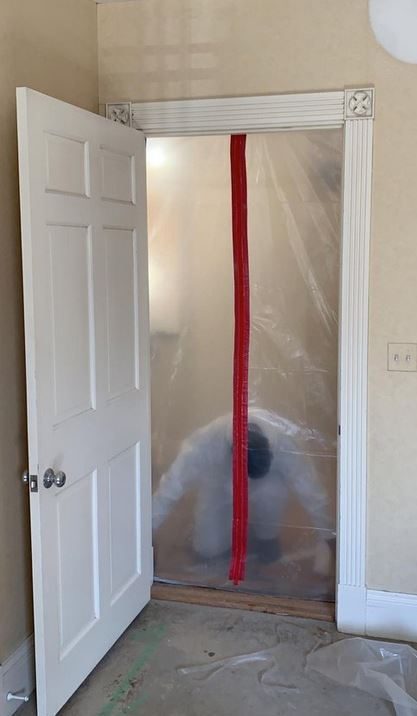
When mold involves more than one unit, coordination is most of the work. A few things help:
- Inspect neighboring units along the same plumbing stack or shared wall, not just the one that reported.
- Plan water shutoffs and plumbing repairs with residents on the whole stack.
- Keep containment and air filtration running so work in one unit doesn't spread dust to hallways or other units.
- Give residents clear notice about timing, noise and which areas are closed.
- Decide in advance whether residents need to be out of the affected unit during the work.
Larger buildings, HOAs and property management companies often handle this through a commercial contractor. Our commercial mold remediation page covers work in multi-unit buildings, including scheduling around occupied units.
Everyday moisture control in apartments
Tenants can't fix a leaking pipe inside the wall, but daily habits still make a difference, especially in smaller units with limited airflow:
- Use the bathroom fan or open a window during and after showers
- Use the range hood when cooking
- Keep furniture a few inches off exterior walls
- Wipe condensation off windows on cool mornings
- Report drips, running toilets and slow leaks early
Leaks happen in every building. If one just happened in your unit, preventing mold after a leak walks through the first two days.
When an inspection helps
An independent mold inspection is useful in rentals when the source isn't obvious, when growth may extend into walls or other units, or when both sides want a clear, neutral picture of what's there before work starts. It gives owners a scope for repairs and gives tenants a straightforward record of what was found.
If anyone in the unit has health concerns, the CDC notes mold can trigger allergy and asthma symptoms in some people. A doctor is the right person for those questions.
Seeing or smelling mold? Call and describe what you're dealing with. We'll tell you what it likely means and arrange an inspection. Phone answered 24/7.
Dealing with mold right now?
Talk to a mold remediation specialist
If this guide sounds like what's happening in your home or building, call us and we'll talk it through. You can also read how we handle commercial mold remediation.
Phone answered 24 hours a day, 7 days a week